
Strength is a necessary skill for any task we set out to execute. It is crucial for performing various tasks, from lifting heavy objects to maintaining as well as executing daily motion, balance and preventing injuries. But what does being strong really mean?
What is Strength?
Strength isn’t just about lifting heavy weights. It’s about having the power to move, stabilise, and withstand loads in everyday life. Whether you’re moving furniture, playing sports, running for a bus, or reaching for a cookie jar on a high shelf, strength helps you perform these activities and maintain physical independence.
Why Strength Matters
Apart from its functional value in performing life tasks with ease, building strength also has other influences that support the rest of the body, like the following but not exclusive to:
- Bone Health: Strong bones help prevent issues like bone fragility.
- Muscle Mass: Good muscle mass can help prevent conditions such as obesity, type 2 diabetes, and heart disease.
- Joint Health: Strong, healthy joints support better movement and specific stimulation to ensure the joints get the necessary nutrients for their longevity.
Addressing these issues early can prevent problems as we age, we have a history of as a population trying to address after the fact as opposed to being proactive throughout our whole lives.
Building Strength with Pilates
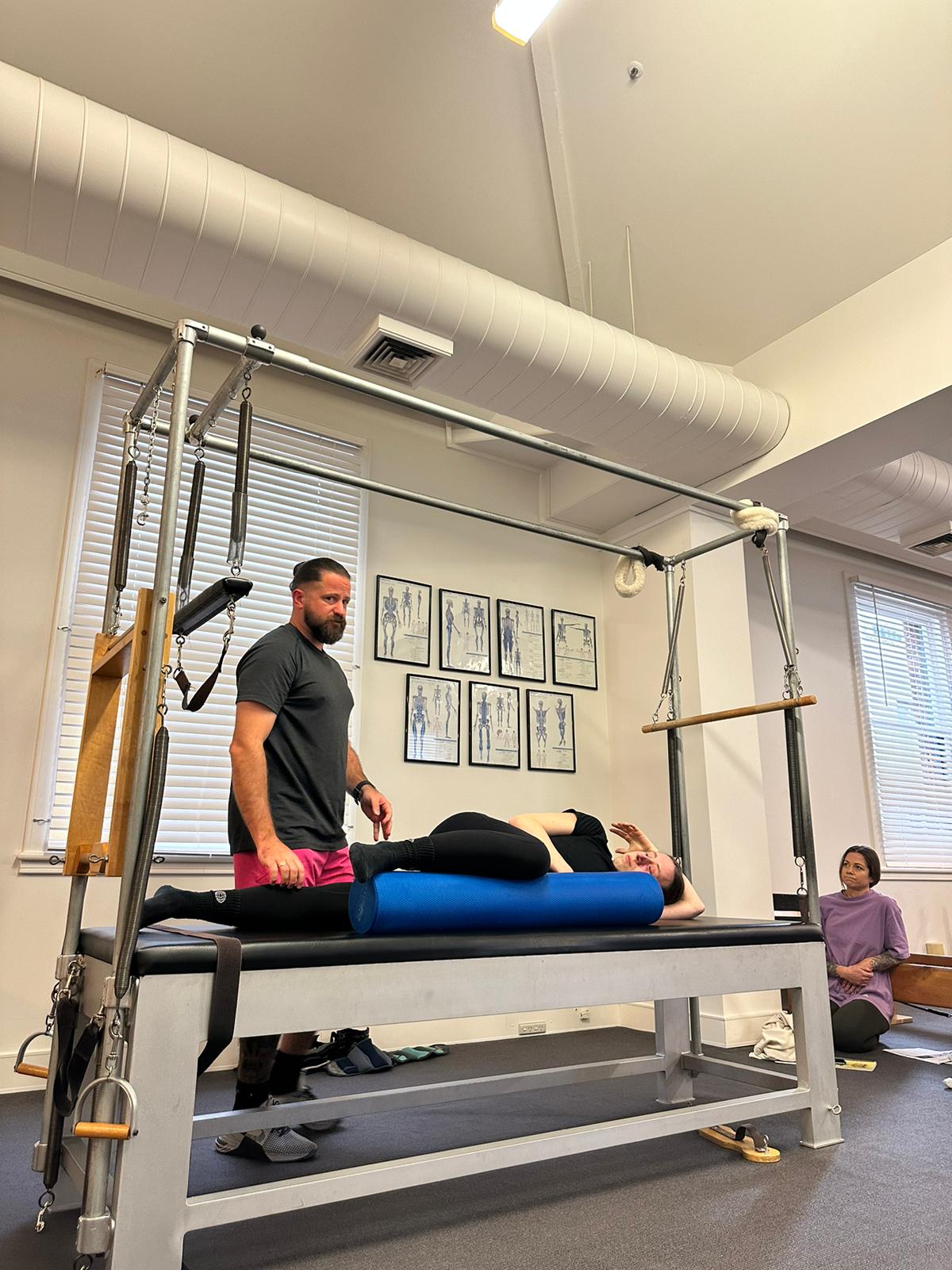
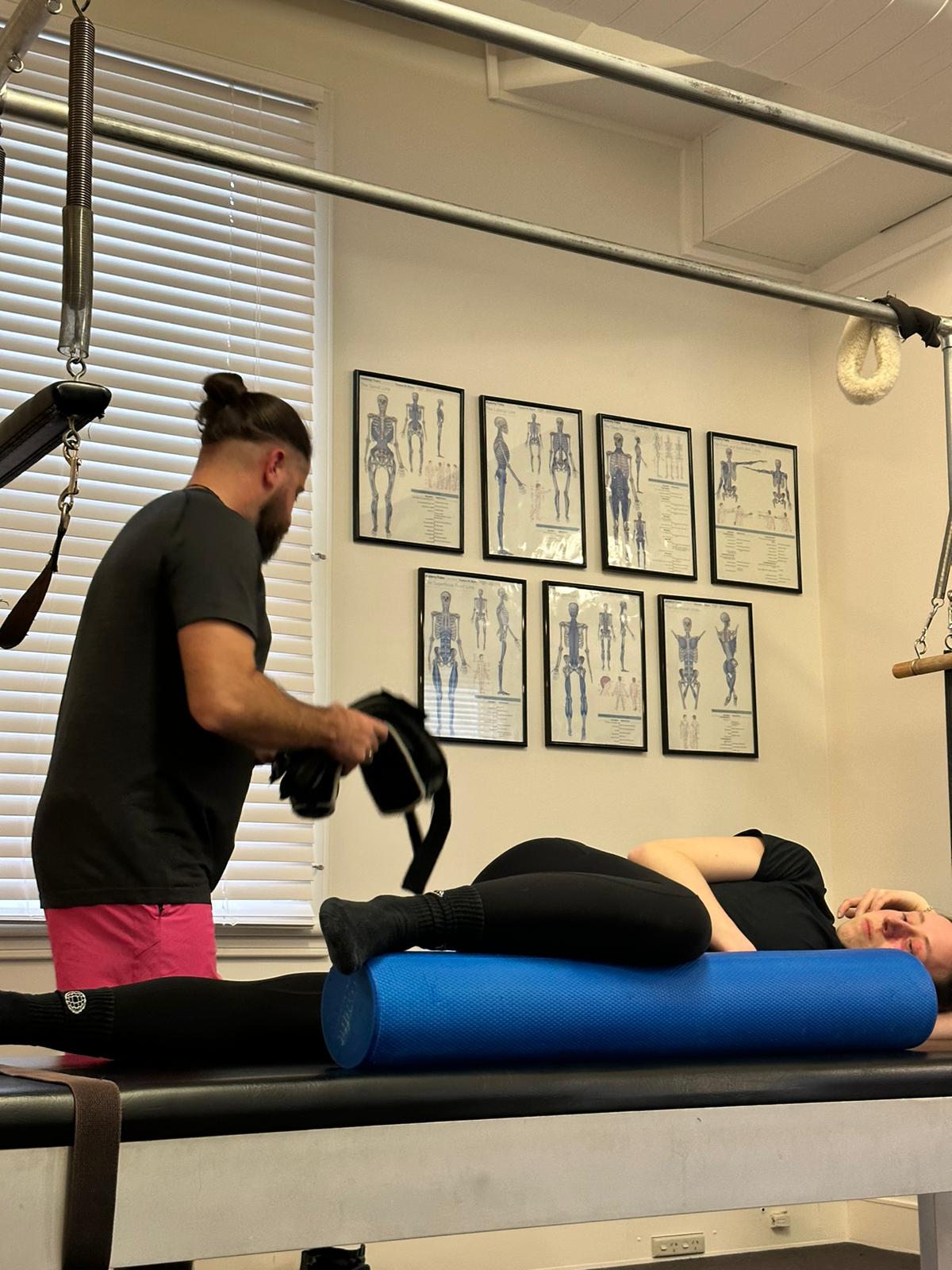
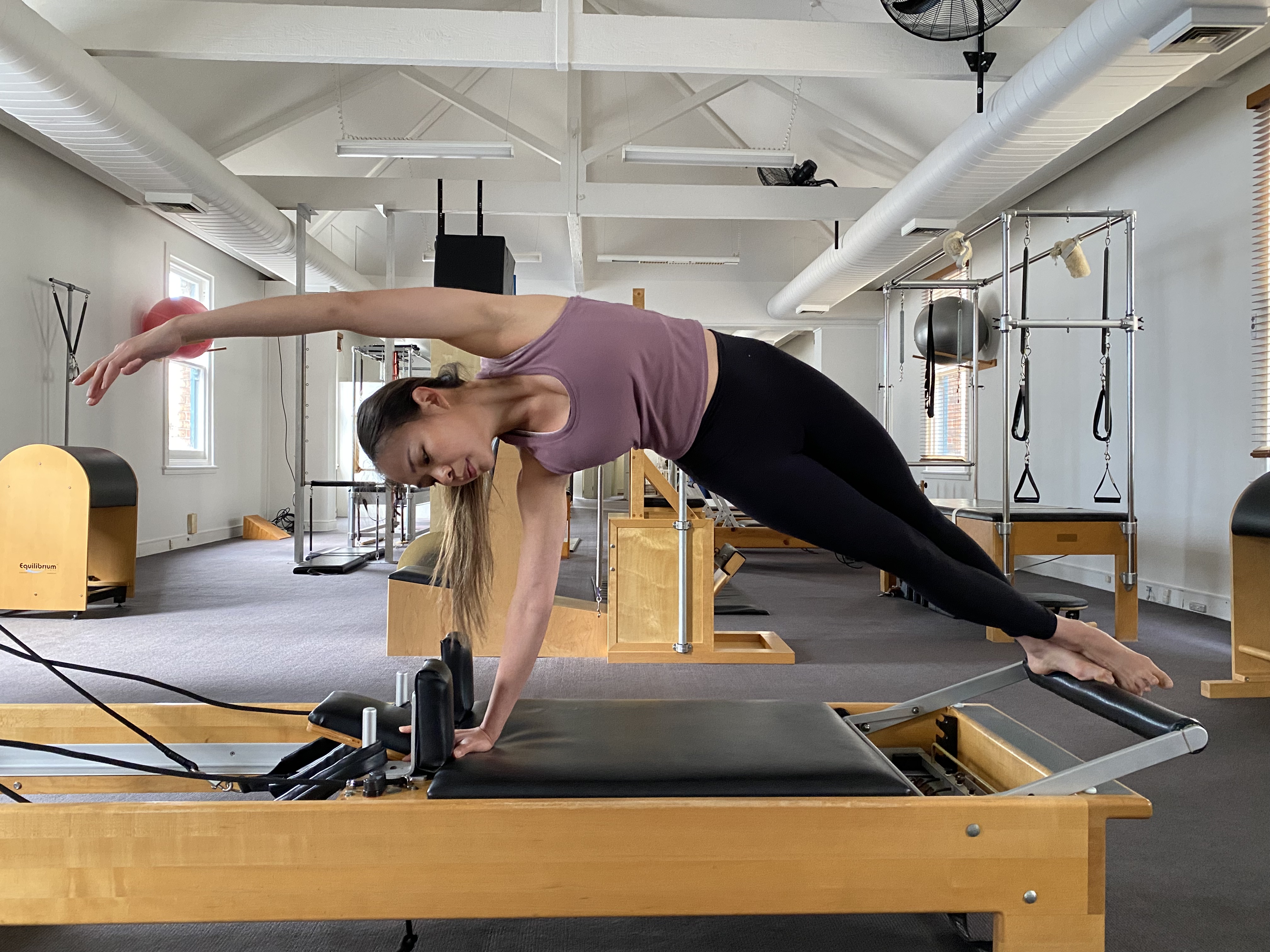
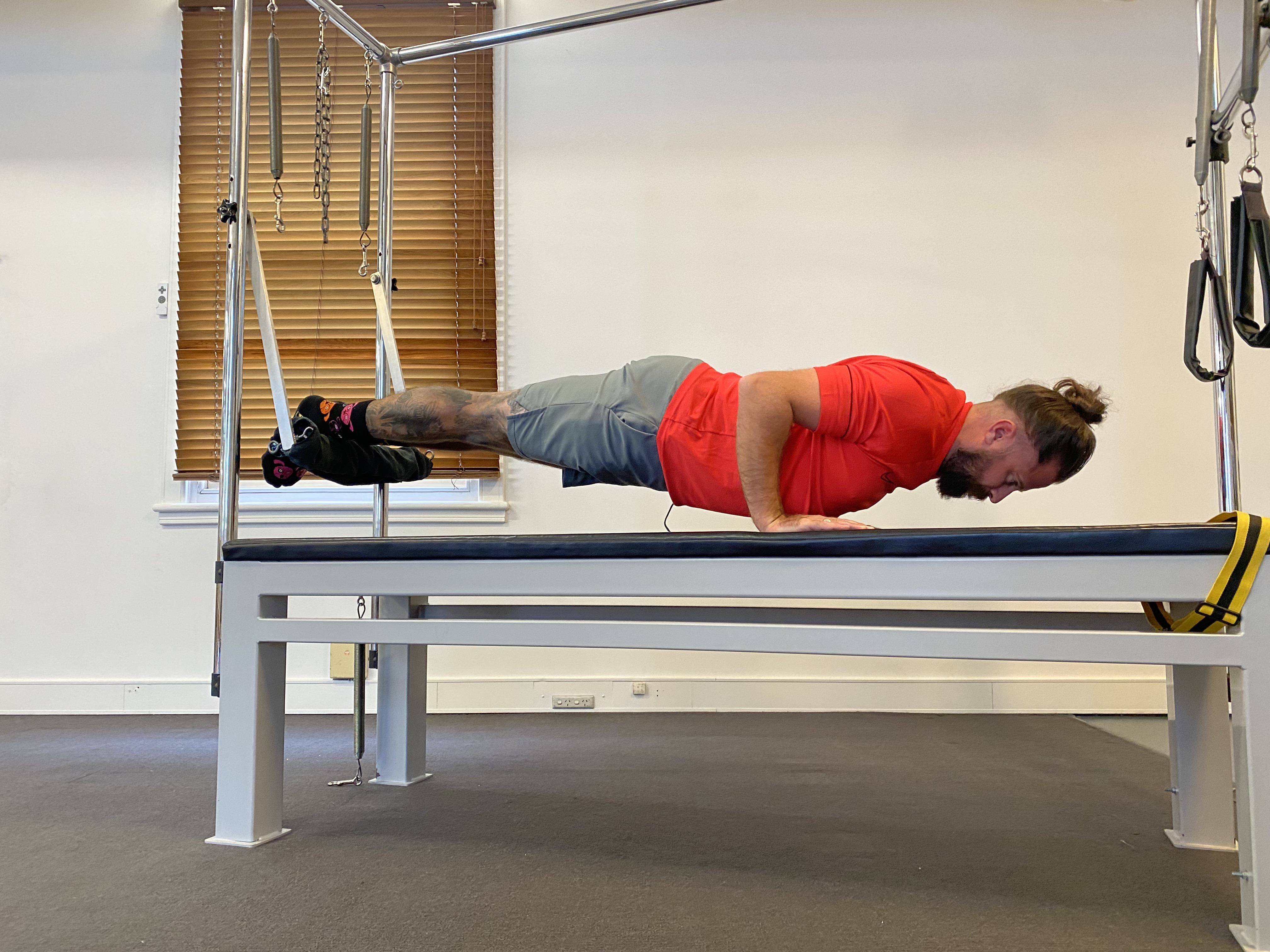
In the Pilates method, we pride ourselves on looking deeper than just the movement. Understanding the different techniques of how to train strength in an individual specific to their need fits well into what we teach daily. Whether it be that client we are looking to build strength in this type 1 endurance stabilising slow twitch fibres, or the client that wants to have a positive change in their lives and become stronger, or even the individual that on paper is already classed as strong yet keeps tearing their hamstring every time they overreach in an awkward position on the field.
Using strength training techniques and principles paired with the Pilates method and principles has the potential to build a complementary approach to your client’s needs and be highly effective.
The Key to Effective Strength Training
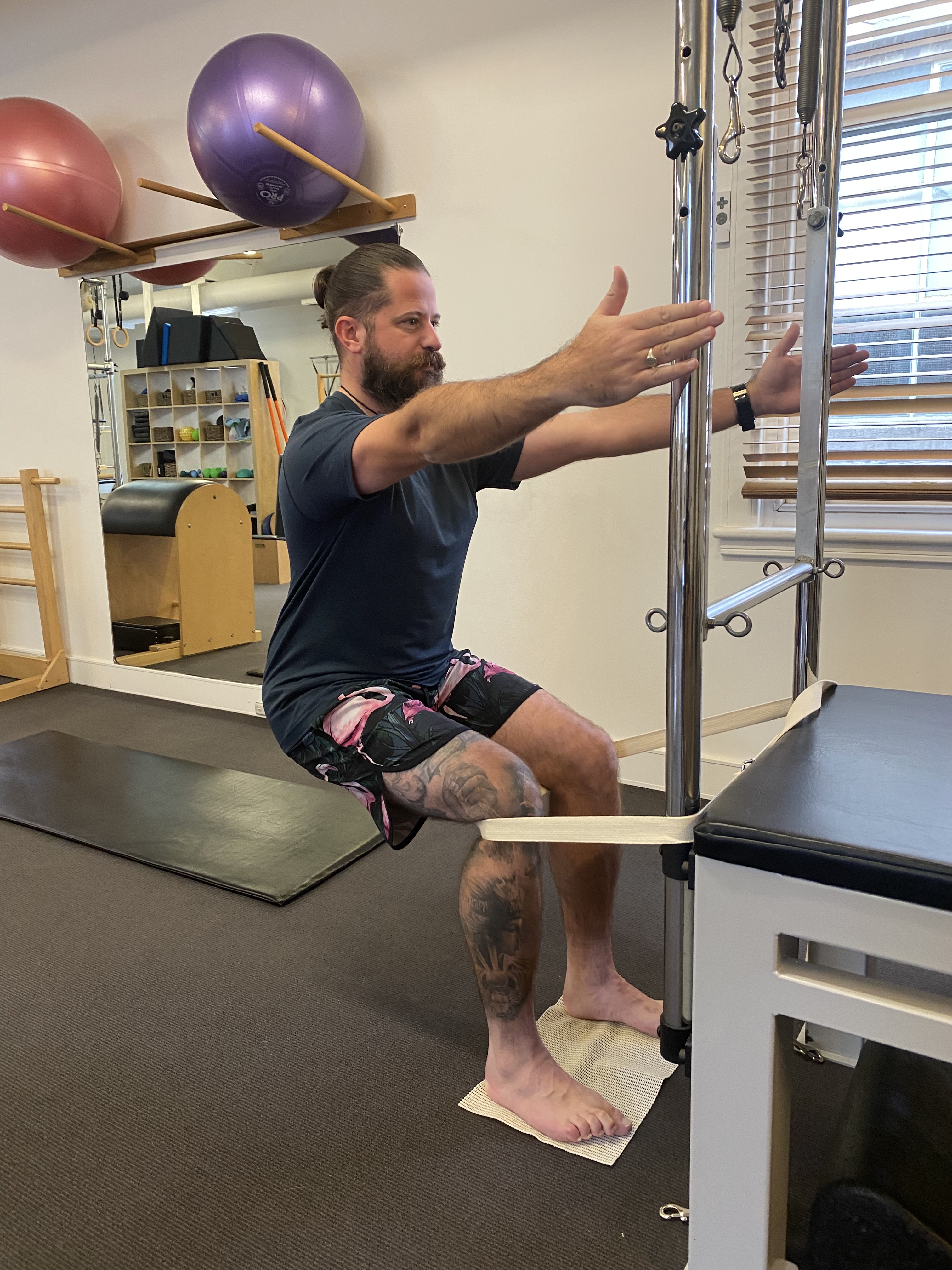
The core of building strength is intensity. Not as in how quickly I can move the resistance or for how long, but as the weight/force that is put upon your body’s tissues must be of a high enough intensity to create a mechanical tension that is above its habitual pattern for the body to recognise that it needs to lay down stronger tissue.
This means applying a weight or force that is challenging enough to push your body beyond its usual limits. Typically, this means using a weight that is at least 70% of your maximum capacity after warming up.
“using a weight that is at least 70% of your maximum capacity after warming up”
If your strength training becomes too routine and lacks progression, it will no longer be effective. To continue improving, you need to gradually increase the challenge over time due to adaption being the main law of training, the need for variability over time is integral to continuing to stimulate the body to build the various properties to build strength.
But I Thought…
Although it is getting better, there are a few misconceptions when it comes to training strength and one of the big ones we hear is that we are going to get too bulky and rigid. Strength training like anything else follows the law of specificity and so depending on what specific input you have into the body depends on what your outcome will be.
Hypertrophy (creating muscle bulk) training and strength training have some overlap but in essence, are two very separate methods of training and a lot of other reactions in the body happen to create strength before we need to worry about the increasing muscle mass on a scale that may potentially be a negative.
“Hypertrophy (creating muscle bulk) training and strength training have some overlap but in essence, are two very separate methods of training“
And as for strength training making you immobile, well if done properly it should have the opposite effect. As you strengthen bodily tissue it has a byproduct of being more elastic at a cellular level. And so therefore if we were to train our body through full ranges of motion with the intention of not just creating flexibility or mobility but also inputting specific strength stimuli into it, it would only increase our potential to withstand forces in our end ranges. This is where we see the elegance in strengthening under length even when we see the challenge in it and not just the action of muscling through a load mindlessly.
Getting Started
When starting strength training, it’s important to find the right balance. We can sometimes be a little cautious in wondering if there is too much load or too little. And rightly so, too much you can run the risk of injury which in the Pilates industry we pride ourselves in migrating this factor. And then too little and you aren’t getting the specific intensity into the body to create strength.
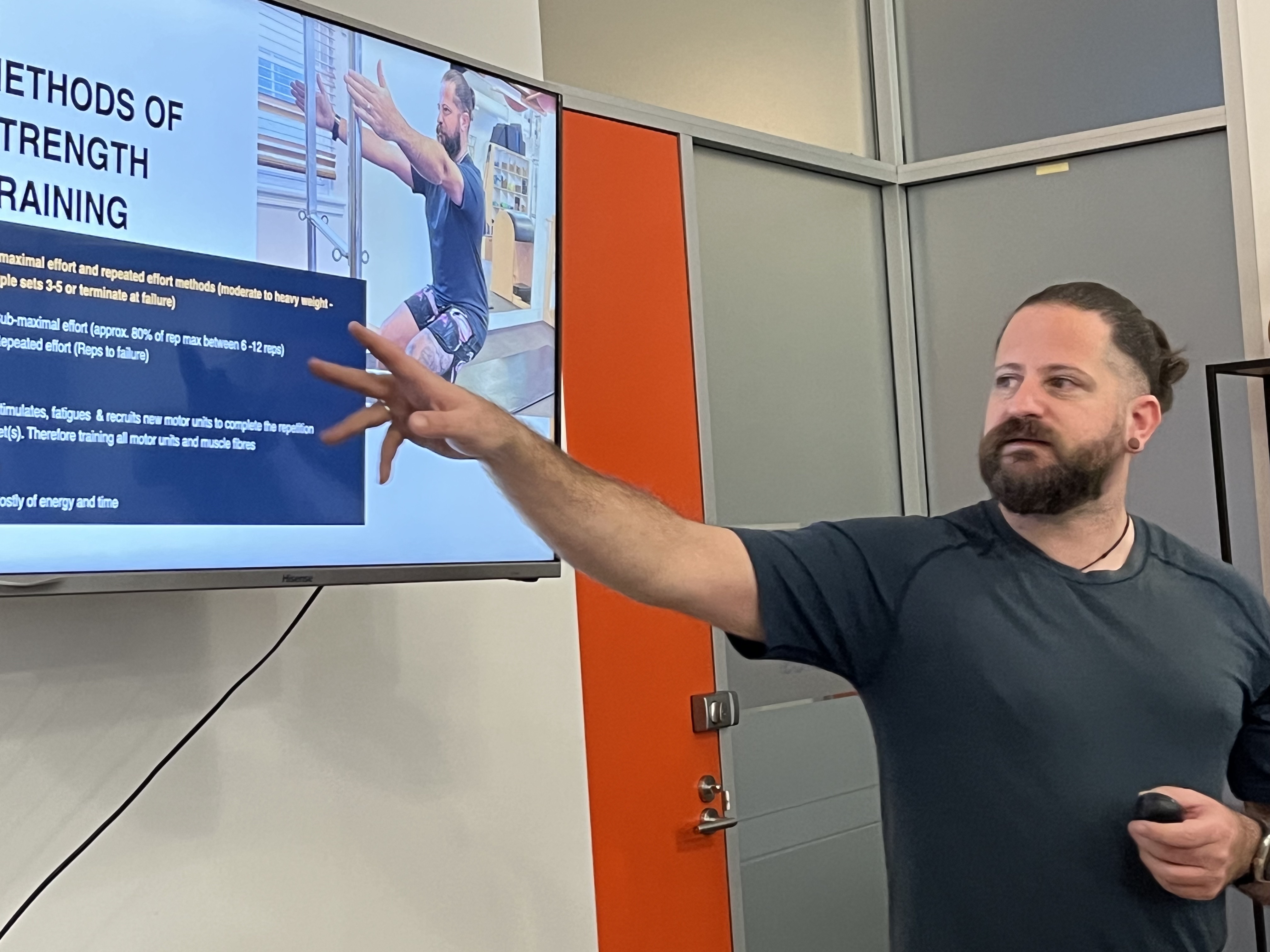
There are many strategies for this that you can use to determine where to start with loading someone from repetition maximums, to what is someone’s absolute maximum strength output (one repetition maximum), to how much volume you should be putting in. However, a simple way to begin with is start by assessing your current level of activity and increase the load gradually. Aim for loads that allow you to complete about 5-8 reps with good form but no more. As you progress, you can then adjust the intensity of load or the volume like repetitions to failure and the exercises to continue challenging yourself progressively overload.
Important Considerations
- Variety: Over time, vary your workouts to continue making progress. The body will adapt over time, but also needs time to adapt.
- Beginners: Start with lower intensity and build skill before advancing to high-intensity and/or more complex loading.
- Individual Needs: Tailor exercises to fit each person’s needs and conditions, especially if you are working with clients where intensity, movements and some loads may be contraindicated.
Training strength is suitable for everyone as it is a need specific to every individual and that specificity is dependent on what they need to achieve in daily tasks as well as combat ageing-related conditions.
And in the words of the late Bill Bowerman (the founder of Nike) – “If you have a body, you are an athlete”
References
- https://www.betterhealth.vic.gov.au/health/healthyliving/resistance-training-health-benefits
- Interview with Dr. Andy Galpin on Building Strength and Hypertrophy, https://www.hubermanlab.readablepods.com/blog/build-strength-grow-muscles/#:~:text=To%20understand%20the%20optimal%20cadence,hypertrophy%20is%20about%20muscle%20size. – Retrieved March 2024
- https://functionalanatomyseminars.com/frs-system/functional-range-conditioning/
- Wisdom K, Delp S, Kuhl E, Review: Use it or loose it: Multiscale skeletal muscle adaptation to mechanical stimuli, Biotech Model Mechanobiol., 2015, pp 195-215
- https://www.verywellhealth.com/muscle-strength-measurement-2696427
- Westcott W, Resistance Training is Medicine: Effects of Strength Training on Health,2012, Current Spots Med. Rep., pp 209-216
- Zatsiorsky V, Kraemer W, Science and practice of strength training, second edition


